Have you ever watched a group of children chase a soccer ball with unstoppable energy, laughing, learning, and competing all at once? Behind every confident kick and clever pass is more than just raw enthusiasm—it’s guided practice, patience, and understanding how kids develop their skills. Helping them grow both as players and as teammates is where a great coach kids’ soccer experience comes into play.
That’s why, at FC Bayern Academy our coaches focus on creating a fun, supportive, and structured environment where every child can thrive. We design age-appropriate drills, games, and activities that develop technical skills, tactical understanding, and physical fitness, all while encouraging teamwork, sportsmanship, and confidence.
Let’s learn how to coach kids’ soccer!
Essential skills: understanding the basics of soccer
Before you embark on this exciting journey of coaching kids’ soccer, it’s crucial to grasp the underlying principles of the game.
Mastering ball control
Ball control simply refers to a player’s ability to collect the ball and gain control over it using all parts of the body – excluding the arms and hands, of course. It’s also about retaining that control while moving. As a coach, you’ll need to teach your players how to use their feet, chest, thighs, and head to effectively control the ball.
Passing and receiving
Passing involves moving the ball from one player to another using different techniques like instep pass, outside pass, and lofted pass. On the other hand, receiving is about gracefully accepting the ball and transitioning into the next move without losing control. Remember, the aim is to keep the ball within your team’s possession as much as possible!
Dribbling and shooting
Dribbling is all about maneuvering the ball around the field while keeping it close to your body. It’s the key to bypassing opponents and creating scoring opportunities. Be sure to teach your players different dribbling techniques such as speed dribbling, close control dribbling, and change of direction dribbling.
Now, what’s a soccer game without the thrill of goals? Scoring goals require shooting skills. Efficient shooting ensures the ball ends up in the back of the opponent’s net and not sailing over the crossbar. Train your players to shoot with both feet and from different angles.
Defending and goalkeeping
Defending is a vital skill that often doesn’t get as much limelight but is a critical component of the game. A solid defense can be the difference between winning and losing. Teach your young players how to intercept passes, block shots, and tackle opponents without fouling them.
Finally, we can’t forget about goalkeeping. This special position requires unique skills such as shot-stopping, ball distribution, and positioning. Even if not all players will be goalkeepers, understanding these skills can help them appreciate the role better.
Implementing age-appropriate training techniques
As a kid’s soccer coach, it’s crucial to understand that not all training techniques are the same for different age groups. The training approach for a 5-year-old will differ significantly from that of a 10-year-old. To ensure an enjoyable and beneficial experience for each player, it’s important to tailor your training sessions to the age group you are working with.
Kids under 6
With the youngest players, the focus should be on simple, fun activities. Basic coordination, ball familiarity, and running are key areas to work on. Don’t stress about in-depth techniques or tactics at this stage. The overall goal for this age group is to develop an interest in soccer and enhance their basic motor skills. Games like ‘Red Light, Green Light’ or ‘Simon Says’ can be excellent choices for teaching kids how to control the ball and their body movement.
6 to 10 years old
As kids grow and develop, they can handle more complex tasks. During this stage, you can introduce passing, dribbling, and shooting techniques. It’s also the perfect time to cultivate an understanding of the basic rules of the game. Training drills can include obstacle courses or mini-matches that encourage these skills. Remember, positive reinforcement is crucial at this age to build confidence and encourage improvement.
10 and above
For older kids, training can now integrate more advanced techniques and tactical understanding. Focus on improving ball control, precision in passing and shooting, and team play tactics. This age group can handle more structured drills, but it’s essential to still keep things fun and engaging. A good way to do this is by incorporating competitive games or challenges into your training sessions.
Training methods
Regardless of their age, kids learn best when they’re having fun. Thus, remember to incorporate games and competitions into your training sessions. You can also use storytelling as a tool to explain complex soccer tactics or drills.
Another important factor in training is consistency. Regular practice sessions help kids develop and improve their skills, so make sure to keep a consistent schedule.
Fostering teamwork and communication among young players
Learning how to coach kids’ soccer goes beyond teaching the basic techniques and rules of the game. It’s about shaping young minds, fostering teamwork, and enhancing communication skills. Here are some strategies that can help guide you on this rewarding journey.
Building a team spirit
At its core, soccer is a team sport. Creating a strong team spirit is an essential part of coaching. Start by encouraging your players to support each other on and off the field. Set a good example by showing respect and appreciation for every team member, regardless of their skill level. This attitude will undoubtedly rub off on the kids.
Encouraging open communication
Encourage your players to communicate with each other during games and practice sessions. Make sure each child feels comfortable expressing their ideas and concerns. Remember, their input can provide valuable insights that will benefit the entire team.
Mastering the art of positive reinforcement
Positive reinforcement can go a long way in fostering teamwork and boosting communication. When a player does something right, be quick to acknowledge and praise them. This will not only boost their confidence but also encourage others to follow suit.
- Example: if a player successfully passes the ball to a teammate, praise them for their teamwork and communication.
Organizing group activities
Activities that promote teamwork can help build a cohesive team. This could be soccer-related tasks or even fun, off-field activities. These experiences allow the kids to bond and develop a sense of unity.
- Activities could include: a team picnic, a friendly match against another team, or an exciting scavenger hunt.
Implementing team roles
Assigning team roles is another effective way to promote teamwork. Each member should understand their role and how it contributes to the team’s overall success. Explain that every role, from the goalkeeper to the forward, is crucial for the team to function effectively. This understanding will foster a sense of responsibility and mutual respect among the players.
Remember, the seeds you plant today will have a lasting impact on these young players, shaping them into future leaders and team players.
Setting practice schedules and drills for kids soccer
It’s important to remember that we’re dealing with kids here, and our main aim should be making soccer fun and engaging while also teaching them valuable skills. So, let’s dive in!
Creating a balanced practice schedule
We want to provide enough practice to help the young players improve, but we also need to ensure we’re not overworking them and making soccer feel like a chore.
- Frequency: for younger kids (below 10 years), two to three training sessions a week, ideally not on consecutive days, is a good starting point.
- Duration: each session should last between 45 minutes to an hour. Start with a warm-up, followed by your planned activities, and end with a cool-down.
- Rest: don’t forget to include short breaks during the session and longer breaks between sessions to help the kids rest and recover.
Designing fun and effective drills
When it comes to learning how to coach kids’ soccer drills, think fun, think engagement. It’s not about rigorous, repetitive drills; it’s about creating games that will help them learn and love the sport.
- Ball control drills: these can be as simple as ‘pass and move’ circles or dribbling through cone forests. Remember, the goal is to make the players comfortable with the ball.
- Passing and shooting drills: use mini-games like relay races or target practice. This encourages both accuracy and teamwork.
- Defensive drills: drills like ‘1 vs. 1’ or ‘keep away’ help develop defensive skills while keeping things competitive and fun.
Progression and variety
Last but not least, ensure there’s progression and variety in your training sessions. Keep changing up the drills and their complexity as the kids improve. This not only keeps them engaged but also helps in developing a wide range of skills.
Building sportsmanship and dealing with winning and losing
Soccer is not always about the score at the end of the game. As a coach, it’s crucial to place your emphasis on the journey, the effort, and the joy of the play.
1. Instilling sportsmanship
Sportsmanship is a term that encompasses a variety of positive behaviors, including playing fair, respecting the rules and officials, and treating opponents with dignity and respect. How can we instill this in our young soccer players?
- Model good behavior: you are the primary role model for your team. Always show respect for everyone involved in the game, and your players will follow your lead.
- Teach respect: help your players understand the importance of treating everyone they encounter with kindness and respect – from their teammates and opponents to the referee and even spectators.
- Encourage teamwork: emphasize the value of each player and their unique contribution to the team. This fosters mutual respect and understanding among team members.
2. Handling victory and defeat
Every game has winners and losers – and each situation provides valuable learning opportunities for your young players. Let’s look at how you can guide them through both scenarios.
- Winning gracefully: when your team wins, encourage them to celebrate responsibly. They should never boast, gloat, or belittle the other team. Instead, they should shake hands, say “good game,” and thank their opponents for a match well played.
- Learning from loss: it’s tough when the team loses, but it’s vital to frame defeat positively. Encourage the kids to see each loss as an opportunity to learn and improve. What went wrong? What can they do better next time?
3. The role of emotions
Kids are inevitably going to experience a spectrum of emotions during games – joy, disappointment, frustration, and more. As a coach, it’s essential to address these feelings and help your players develop strategies to deal with them.
- Normalize emotions: reassure your players that it’s okay to feel upset or disappointed after a defeat, and it’s equally okay to feel happy and proud after a win. It’s all part of the game.
- Teach coping strategies: show your players how to manage their feelings in a healthy and constructive way. This might include taking deep breaths, counting to ten, or talking about their feelings with a trusted adult.
Engaging parents and creating a supportive environment
When learning how to coach kids’ soccer, one of your primary roles extends beyond the field—it’s also about creating a supportive environment that includes the players’ parents. Engaging parents effectively can turn them into your biggest supporters and advocates. Here are some tips on how to do it.
Setting expectations
Clear communication is crucial in engaging parents and creating a supportive environment. Start the season by setting clear expectations. It’s important to communicate to parents that while winning is great, the primary goal is for the kids to learn, enjoy the game, and develop their skills.
Regular communication
Keeping parents in the loop can help foster a sense of community and involvement. Whether it’s through email, social media, or a group messaging app, regular updates about practice schedules, game times, and player progress can go a long way in engaging parents.
Encourage involvement
The more involved parents are, the more supportive they tend to be. Encourage parents to take an active role in the team community. This could be through volunteering for team duties, cheering at games, or even assisting with practices when needed.
Addressing concerns
There may be occasions when a parent has a concern or complaint. It’s important to address these concerns promptly and professionally. Remember, good listening skills can help diffuse a situation and show parents that you value their input.
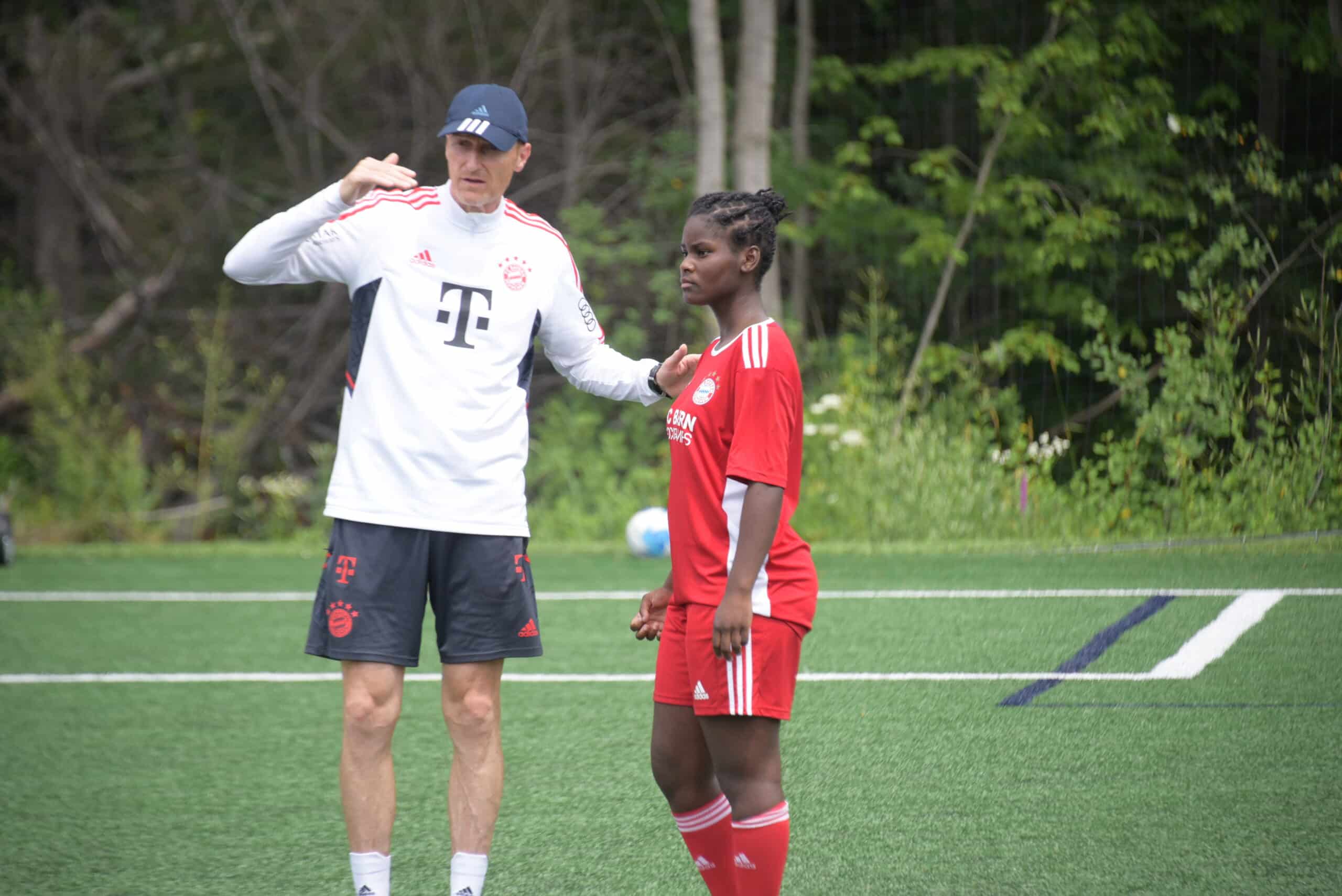
Building confidence on the field
As we’ve seen, learning how to coach kids’ soccer is about more than drills, tactics, or winning games—it’s about shaping experiences that inspire, challenge, and empower young players.
At FC Bayern Academy, we believe that every practice, every pass, and every laugh on the field contributes to building confidence, teamwork, and a lifelong love for the game. If you’re ready to be part of a program that nurtures both skill and character, check your closest location, join our programs and help your child experience the joy of soccer in a way that lasts far beyond the final whistle.