Have you ever watched a soccer match and found yourself captivated not just by the goals, but by the way the players seem to predict each other’s moves? There’s more at work than individual skill—it’s the careful planning, the positioning, and the way teammates anticipate each other. At FC Bayern Academy, we’ll explore how to understand tactical and team work in soccer.
We believe that mastering soccer is about understanding the game, reading your teammates, and knowing when and where to make the right move. Our approach focuses on building players who think, act, and adapt as part of a cohesive unit, ensuring that each pass, run, and defensive action contributes to the team’s overall success.
Understanding the basic soccer tactics
Let’s kick this off with a simple question: What are soccer tactics? Simply put, these are the strategies or plans used by a team during a game to outsmart the opposition. Having a tactical approach lends precision and purpose to the way a team plays, enhancing its chances of success. It also helps to know the official Laws of the Game.
Balancing defense and attack
The key to a great soccer tactic is finding balance. Teams need to be equally capable of defending their goal while simultaneously posing a threat to the opposition’s. This dual role is mainly handled by midfielders, who act as the bridge between the defense and offense.
Formations
Ever heard of terms like 4-4-2 or 4-3-3 being thrown around during a soccer match? Those are soccer formations. These numbers represent the distribution of players across the field. For instance, a 4-4-2 formation means there are four defenders, four midfielders, and two forwards.
- 4-4-2: considered a balanced and versatile formation, it provides a strong defense and allows for quick counter-attacks.
- 4-3-3: this is a more offensive formation, often used by teams with strong attacking prowess.
Zonal vs man-to-man marking
In zonal marking, each player is assigned a specific area on the field and is responsible for defending it. On the other hand, man-to-man marking requires each player to stick with and defend against a particular opponent.
Controlling possession
Teams aim to control the ball for as long as possible to create scoring opportunities and keep the ball away from the opposition. This is often achieved through short, quick passes and maintaining a good formation.
Counter-attacks
This is a swift and lethal tactic used when the opposition is vulnerable, usually right after their attack is thwarted. The defending team quickly transitions into an attacking mode, aiming to score before the opponents can regroup.
Role of teamwork in soccer success
Teamwork is the lifeblood of soccer and is the one responsible for consistently winning matches and championships. It’s all about passing, moving, and working together as a single, fluid unit.
A single player, no matter how skilled, can’t take on an entire team alone. Soccer is a sport where all 11 players need to come together, understand each other’s strengths and weaknesses, and work as a cohesive unit.
Moreover, teamwork in soccer is about trust. When a player passes the ball, they trust that their teammate will be in the right place at the right time. This trust and understanding don’t happen overnight. It takes time, patience, and plenty of practice.
How does teamwork influence tactics?
A well-coordinated team can execute complex tactical plays that can outwit even the most formidable opponents. This is where the beauty of soccer truly lies – in its intricacy and the strategies employed by teams to gain an upper hand.
For instance, think about the ‘Give-and-Go’ tactic. It’s simple yet effective. Player A passes the ball to Player B and then immediately moves into space. Player B then passes the ball back to Player A, who’s now in a better position. The success of this play hinges entirely on teamwork and understanding between the two players.
Tips to improve teamwork in soccer
- Communicate: on the soccer field, communication is key. Players need to talk to each other about their positions, the opponents’ movements, and potential plays.
- Understand your teammates: each player has a unique style of play. Understanding your teammates’ strengths and weaknesses can help you anticipate their moves and play more cohesively as a team.
- Practice together: teamwork isn’t something that develops overnight. It requires time and practice. Regular training sessions are essential to build that rapport and understanding among the players.
- Support each other: finally, always be there for your teammates, both on and off the field. Celebrate the victories together, and support each other in the face of defeat. This camaraderie can translate into better teamwork on the field.
Advanced soccer tactical strategies
Now, you’re ready to delve deeper and explore some advanced soccer tactical strategies that can take your team’s game to the next level. Let’s dive in!
Understanding positional play
This is a tactical strategy that focuses on maintaining control of the ball by strategically positioning the team. The idea is to create numerical advantages around the ball and exploit the spaces on the field. It requires a high degree of understanding and coordination between the players.
Switching the play
This tactic is used to create space and disorient the opposing team’s defensive structure. It involves rapidly moving the ball from one side of the pitch to the other to stretch the opposition, create space, and attack from new angles. It’s a brilliant way to mix things up when your team is struggling to penetrate a tight defense.
High pressing
High pressing is a tactic that involves putting pressure on the opposition close to their goal. The goal here is to force errors from the opponent in their defensive third, allowing your team to win the ball back in a dangerous position. This strategy requires a high level of fitness and coordination between the players.
The false nine
This is an advanced tactical strategy that requires a forward who can drop deep into midfield, drawing defenders out of position and creating space for wingers to exploit. The term ‘False Nine’ refers to a forward who acts more as a playmaker than a traditional striker. This strategy can completely bamboozle unsuspecting defenses.
- Pro tip: remember, these advanced strategies require excellent communication and understanding between teammates. Practice these tactics in training before implementing them in a game!
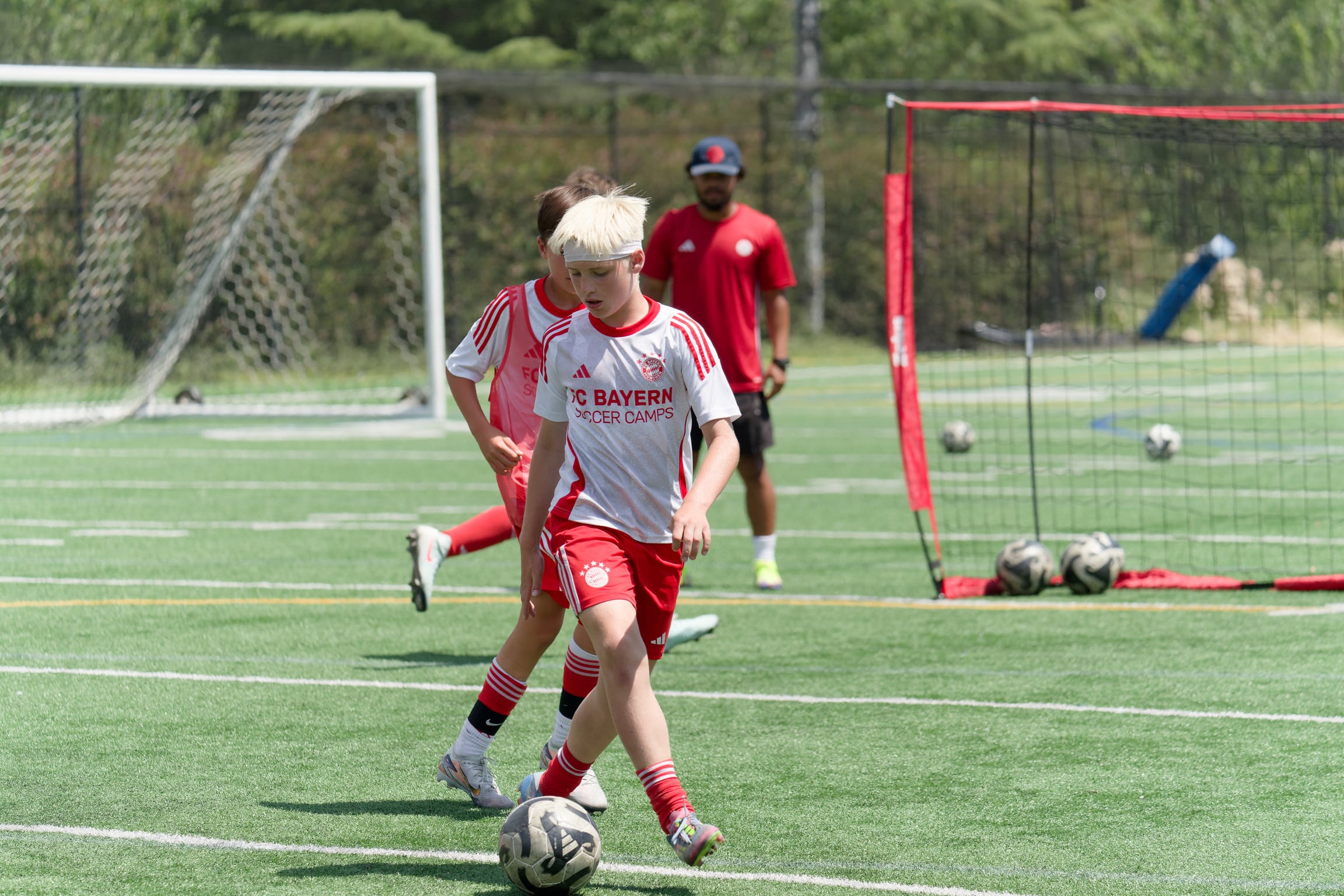
How can coaches teach young players to work better as a team?
Coaches can help young players work better as a team by making collaboration a regular part of training.
Define roles and responsibilities clearly
Young players often perform better together when they know what their role is within the team. Coaches should explain each player’s responsibilities in a simple and age-appropriate way, showing how every position contributes to the group. This helps players see that success does not depend on one standout individual, but on how well everyone works together. Clear roles also reduce confusion on the field and make it easier for players to trust one another.
Encourage positive communication
Good communication is one of the most important parts of teamwork. Coaches should teach young players to speak up during drills and matches, call for the ball, give clear instructions, and encourage one another. Just as important, they should promote positive language after mistakes. When players learn to support teammates instead of blaming them, they create a more confident and united environment. These communication habits can improve both performance and relationships within the team.
Use drills that reward collaboration
Training activities should be designed to show players that working together leads to better results. Small-sided games, passing sequences, movement drills, and team challenges are all useful for teaching cooperation in a practical way. These exercises help young athletes develop trust, timing, and awareness of others on the field. They also reinforce the idea that smart teamwork often matters more than individual skill alone.
Lead by example as a coach
Young players usually copy the behavior they see from their coach. For that reason, coaches should model respect, patience, fairness, and self-control in every session. The way a coach speaks to players, reacts to mistakes, and handles competition has a direct effect on team culture. When coaches show calm leadership and treat everyone fairly, players are more likely to reflect those same attitudes with their teammates.
Build a team-first mentality
A strong team spirit grows when players learn to value the group over personal recognition. Coaches can develop this mindset by praising unselfish play, celebrating collective improvement, and highlighting moments of mutual support. When the focus is placed on effort, cooperation, and shared progress, young athletes begin to understand that being a good teammate is just as important as performing well individually. This approach helps create a healthier, more connected, and more successful team.
Mastering the game together
The most successful teams are the ones that can combine strategy, communication, and coordination on the field. If you know how to understand tactical and team work in soccer, you gain the tools to read the game, anticipate plays, and contribute effectively to your team’s success.
At FC Bayern Academy, we believe in developing young players who excel not only individually but also as part of a cohesive team. Our programs focus on teaching both the fundamentals of soccer tactics and the importance of collaboration, helping players elevate their game while embracing the spirit of teamwork.
Ready to take your skills to the next level? Join our camps across the US and experience first-hand how professional training and expert coaching can transform your understanding of the game. Learn, play, and grow with FC Bayern Academy—where tactical insight meets team excellence.