Countless players spend hours on the training ground, running drills, practicing shots, and pushing their limits—yet still feel as though their progress has stalled. The frustration often doesn’t come from a lack of effort, but from a lack of direction. Without a clear roadmap, training can quickly become repetitive, unfocused, and ultimately less effective. The difference between simply working hard and actually improving lies in having a structured plan. That’s where training goals for soccer come in: they transform random practice into purposeful progress, ensuring that every session brings you closer to the player you aspire to be.
At FC Bayern Academy, we’ve learned that passion and hard work are only truly effective when guided by a clear purpose. That’s why we place such importance on training goals for soccer—they turn effort into measurable progress and give every session meaning. In this guide, we’ll show you how goal-setting shapes both individual development and team success, and share practical strategies you can apply to train with the same focused approach we instill in our players every day.
Why are training goals important?
Training without a specific aim or target is a bit like shooting in the dark. You might make progress, but it’s going to be slow and unsteady. In contrast, when you have clear, well-defined goals, you have a roadmap to success.
- Focus: training goals give you something specific to aim for. They help keep you motivated and focused, especially during those tough training sessions.
- Progress: with goals, you can track and measure your progress. You’ll see how much you’re improving, which can be a significant confidence booster.
- Accountability: goals also hold you accountable. They remind you of what you promise to achieve and push you to work towards it.

Identifying personal and team objectives in soccer
Setting objectives is a crucial aspect of any sport, and soccer is no exception. Let’s dive right into how you can identify your personal goals and the objectives of your team to foster individual growth while promoting a sense of unity and collaboration.
Starting with personal objectives
Identifying personal objectives in soccer depends largely on your role in the team. Are you a striker, a midfielder, a defender, or a goalie? Each position requires specific skills and strategies, and thus, your objectives should reflect this.
Maybe you’re a striker who wants to increase your goal tally. An objective could be to ‘Score 5 more goals than the previous season’. Or perhaps you’re a defender aiming to enhance your defensive capabilities. A measurable goal could then be to ‘Decrease the number of goals conceded when on the field by 10%’ .
- It’s important to be specific with your personal objectives. The more specific you are, the easier it will be to track your progress.
- Make sure your objectives are measurable. Numbers are your friends here; they allow you to see exactly how well you’re doing.
- Ensure your goals are attainable. Aim high, but not so high that you set yourself up for disappointment.
Moving onto team objectives
Team objectives in soccer are equally important. A team is more than the sum of its parts, and by working towards a common goal, the cohesion and synergy within the team are enhanced.
Team objectives should be broad enough to encompass the goals of all team members. For instance, a team goal could be to ‘Win the regional championship’ or to ‘Improve team’s goal difference by 15%’.
- Remember, these objectives should be collective. Everyone on the team should be working towards them.
- Just as with personal goals, team objectives should also be measurable.
- Lastly, these goals should be challenging yet achievable, pushing the team to perform better without disheartening them.
Establishing realistic and measurable soccer training goals
Setting realistic and measurable goals is a crucial element of any successful soccer training program. But how exactly do you go about it? Let’s have a friendly chat about that.
Understanding realistic goals
The first step is to recognize what realistic goals look like. These are goals that push you to improve but don’t set you up for failure. For instance, if you’ve never scored a goal before, setting a goal to score 10 goals in the next game might be a bit of a stretch. A more realistic goal might be to focus on improving your shooting accuracy during practice or to aim for scoring a goal in the next month.
“Setting goals is the first step in turning the invisible into the visible.” – Tony Robbins, a renowned author and motivational speaker, once said. So, when setting your soccer training goals, aim for those that are both challenging and achievable, allowing you to turn your soccer dreams into a tangible reality.
Importance of measurable goals
These are goals you can quantify, like ‘improve sprint speed by 10%’ or ‘increase pass completion rate by 15%’. These provide a clear target to aim for and make it easy to track progress. But remember, while numbers are important, they’re not everything. Soccer is a team sport, and many valuable contributions can’t be measured in simple statistics.
Key elements for creating an effective soccer training program
Crafting an effective soccer training program requires thoughtful planning and a clear understanding of the key elements that make it successful. So, what are these key elements?
1. Skill development
This embodies everything from fundamentals like passing and shooting to more complex skills like positioning and game strategy. Incorporating diverse drills and exercises that focus on enhancing these skills is a must.
2. Physical conditioning
Soccer is a physically demanding sport that requires endurance, speed, strength, and agility. A player who is not in peak physical condition will struggle to keep up with the pace of the game. Hence, your program should integrate various physical conditioning workouts to keep players fit and ready.
3. Tactical understanding
Knowing how to play soccer is one thing; understanding the tactics of the game is a different ball game—literally. This includes understanding different formations, player roles, and how to adapt to various game situations. It’s not all about physical prowess; a great deal of soccer is played in the mind too!
4. Regular assessment and feedback
If you are a coach, this will allow you to track progress, identify areas for improvement, and give constructive feedback to players. If you are a player, it will help you understand your strengths and weaknesses better.
5. Recovery and rest
Finally, never underestimate the power of a good rest. It’s essential to balance training intensity with adequate recovery time to prevent injuries and burnout. So, ensure your program provides enough time for players to rest and rejuvenate. Remember, a well-rested player is an effective player.
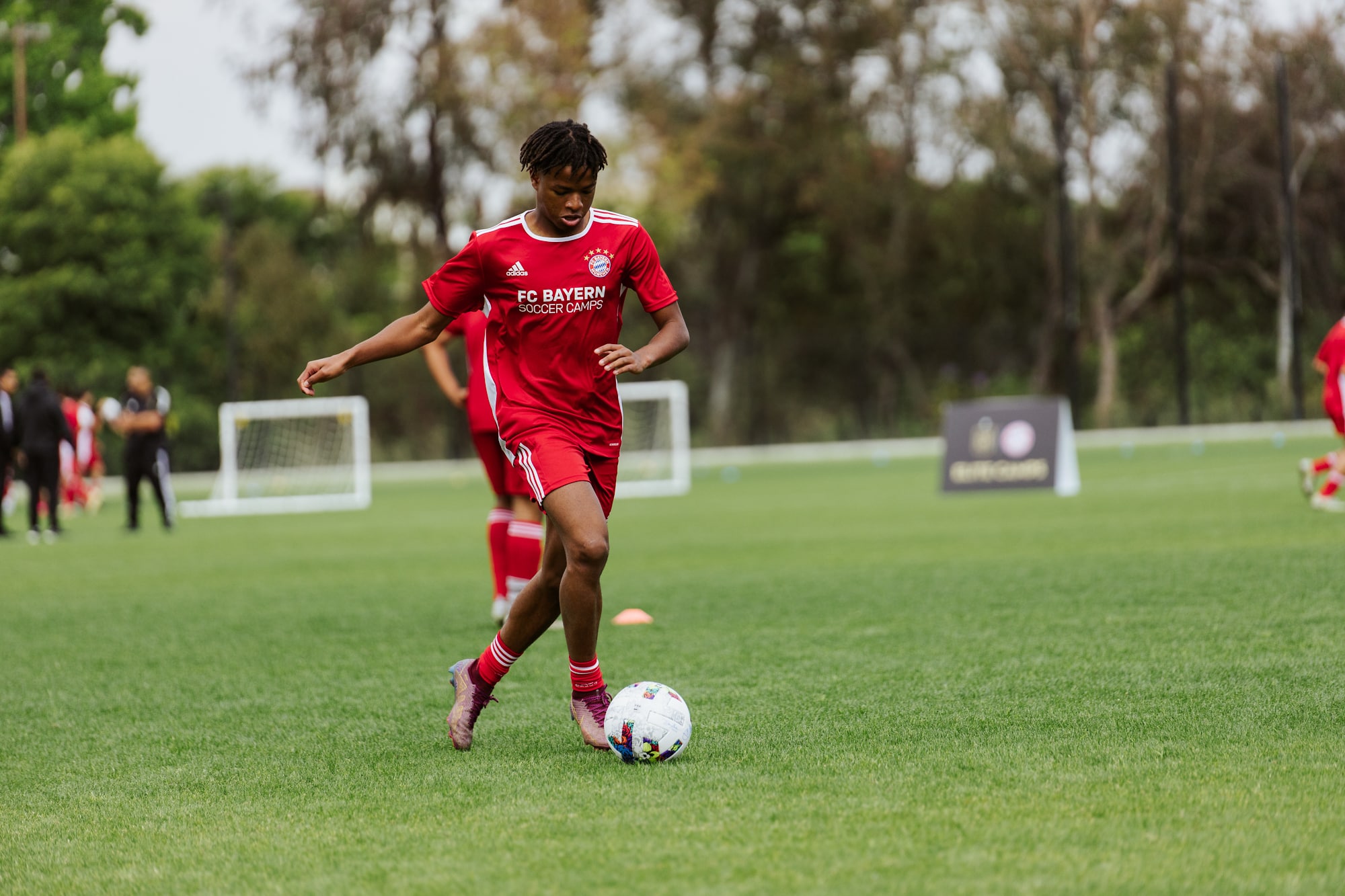
Role of consistency and discipline in achieving soccer training goals
Once you’ve set your soccer training goals and crafted a killer training program, now the question is, how do you plan on making those goals a reality? That’s where consistency and discipline come into play.
Consistency: the key to mastery
Think about it: what’s the point of having a well-rounded training program if you don’t stick to it? It’s like buying a gym membership and never going there.
- Consistent practice: this is crucial for improving your soccer skills. It’s all about the repetition of drills and exercises. The more you practice, the better you get. Sounds simple, right? But it requires dedication.
- Consistent performance: consistency also comes into play during actual games. The ability to maintain a steady performance throughout the match is a sign of a well-trained player.
Discipline: your secret weapon
Discipline is like the fuel that keeps the engine of consistency running.
- Discipline in training: this means sticking to your training schedule, even when you don’t feel like it. Yes, there will be days when you would rather stay in bed or hang out with friends. That’s when your discipline should kick in.
- Discipline on the field: maintaining discipline during matches is just as important. It’s about respecting the rules of the game and the decisions of the referee, even when things get heated.
Discipline also extends to your lifestyle choices. Eating a nutritious diet, getting enough sleep, and avoiding harmful habits like smoking or excessive drinking are all part of a disciplined approach to soccer training.
Bringing it all together
At the end of the day, talent and effort can only take you so far without direction. What truly shapes a player’s journey is the ability to set clear intentions and transform them into action. That’s the real power of training goals for soccer: they don’t just sharpen your skills, they build resilience, accountability, and purpose every time you step onto the field. At FC Bayern Academy, we embrace this philosophy wholeheartedly, designing every program with goal-setting at its core. By aligning passion with structure, we help young players to improve their performance and to develop the mindset needed to thrive at the highest levels of the game.